Santiago metropolitan blackout
My Tender MatadorThe Santiago metropolitan blackout is both a political event and a recurring disruption in the Queen of the Corner’s daily life. Radio Cooperativa reports that the Manuel Rodríguez Patriotic Front claimed responsibility for leaving the metropolitan area without electricity, while the novel sets that announcement against protests, official warnings, and the Queen’s increasingly consequential connection to Carlos. The blackout makes the struggle over information audible: when ordinary power fails, radio carries both urgent news and a measure of comfort.
The blackout and the news
The blackout enters the narrative through a Radio Cooperativa bulletin heard in a car with the Queen and Carlos. The announcer attributes the loss of electricity across the Santiago metropolitan area to the Manuel Rodríguez Patriotic Front. The report follows patriotic music on the dial, contrasting official-sounding national songs with a station that identifies the political group claiming responsibility. The Queen has become accustomed to hearing Radio Cooperativa, although she once preferred old songs and found the station’s reports frightening.
The city’s electrical failure belongs to a broader pattern of unrest. The novel recalls streets cordoned off, demonstrations, banging pots and pans, and news bulletins arriving amid a citywide blackout. Political slogans circulate alongside reports of protest, while the Queen encounters the crisis through the radio rather than as a committed participant in the political struggle. Her attention is drawn especially to the suffering of families searching for detained or disappeared relatives, making the broadcast a channel through which political violence reaches her domestic life.
Radio as information and refuge
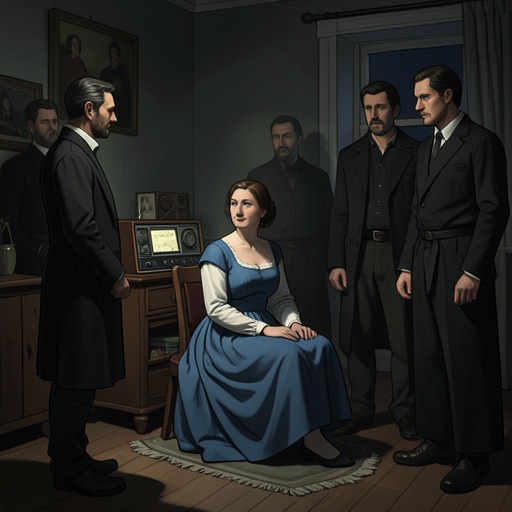
Radio Cooperativa serves as more than a source of updates. When bombs cut the electricity and the Queen has to power her radio with batteries, the familiar voice of newsreader Sergio Campos becomes reassuring to her. The station’s reporting links distant events to the Queen’s private concerns: she associates its voice with Carlos, who is persistently attentive to the news, and listens to accounts of police action and the suffering of families seeking loved ones.
That relationship between radio and household life recurs as the political situation intensifies. After a report of university rioting says that more than twenty students were injured and at least as many arrested, the Queen fears that Carlos may be among them. Later, when a government communiqué announces that a subversive plan for September has been uncovered, she turns back to Radio Cooperativa, seeking what she regards as a more reliable account. The blackout’s interruptions therefore sharpen a larger contrast: government announcements demand vigilance and warn of threats, while the station’s reports give the Queen information about protests and human consequences.
From listening to involvement
The Queen’s role changes as political events draw closer to her home and to Carlos. At first she is frightened by the news and prefers music; she is not initially part of the political fray. But her attachment to Carlos, who has stored boxes in her house and held meetings there, makes political developments personal. News of arrests and official warnings leads her to worry about his safety, even when she does not know the full purpose of his activities.
In a later episode of repression, the Queen carries a package for Carlos through a demonstration and police advance, then delivers it to a man waiting outside a store. The event is not presented as a direct consequence of the blackout, but it shows how the political world first encountered through broadcasts has become a world in which she acts. During the subsequent military searches and lockdown, she keeps the radio on quietly for the latest bulletins and leaves a kettle ready in case Carlos or his friends arrive. The blackout thus belongs to a narrative progression from anxious listening toward practical exposure to danger.
Significance
The blackout connects infrastructure, political communication, and intimate life without reducing the event to a technical failure. Darkness interrupts familiar routines, but radio restores a channel through which claims, warnings, and reports of suffering can circulate. The contrast between patriotic music, government communiqués, and Radio Cooperativa’s reporting makes the broadcast itself part of the political atmosphere.
For the Queen, the radio is at once a companion and a source of news she would once rather avoid. Its reports bring the dangers surrounding Carlos into the home, while its familiar voice offers reassurance when the lights go out. The blackout consequently marks a turning point in how she experiences politics: not as an abstract public dispute, but as information heard in her rooms, concern for people she loves, and a growing entanglement with the resistance around her.